
The Evolution of Decision Patterns When Card Enthusiasts Blend Virtual Interfaces with Remote Physical Gatherings in Elevated European Settings
Card enthusiasts across Europe have shifted toward hybrid formats that merge virtual interfaces with physical gatherings in elevated mountain locations, and decision patterns have changed accordingly since the mid-2010s. High-altitude venues in the Alps and Pyrenees provide the settings where participants connect remote players through digital platforms while maintaining face-to-face interactions at physical tables. Observers note that these arrangements alter how players process information, assess risks, and adjust strategies during sessions that span both online and onsite components.
Historical Development of Hybrid Card Events
Early experiments with hybrid card gatherings began around 2015 when European organizers tested virtual overlays at traditional venues, yet the model gained traction after 2020 when travel restrictions prompted broader adoption. Data from industry reports shows participation in mountain-based hybrid events rose by 35 percent between 2021 and 2025, with venues in Switzerland and Austria hosting the majority. Researchers at institutions such as ETH Zurich documented how altitude and isolation influence concentration, while virtual interfaces compensate for geographic separation by supplying real-time data feeds and chat functions.
By 2024, several operators had standardized protocols that allow remote entrants to join tables located above 1,500 meters, and physical participants receive synchronized updates through dedicated screens. This setup creates a shared information environment where decision timing varies between onsite and remote groups.
Technological Integration and Its Effects
Virtual interfaces now include augmented reality overlays, encrypted video links, and algorithmic suggestion tools that display odds without replacing player judgment. Studies conducted by the European Gaming and Betting Association indicate that players using these tools exhibit shorter deliberation periods yet maintain comparable win rates to traditional formats when sessions last under four hours. European Gaming and Betting Association reports further reveal that bandwidth stability at elevation sites remains critical, since connection drops force immediate shifts to local-only play.
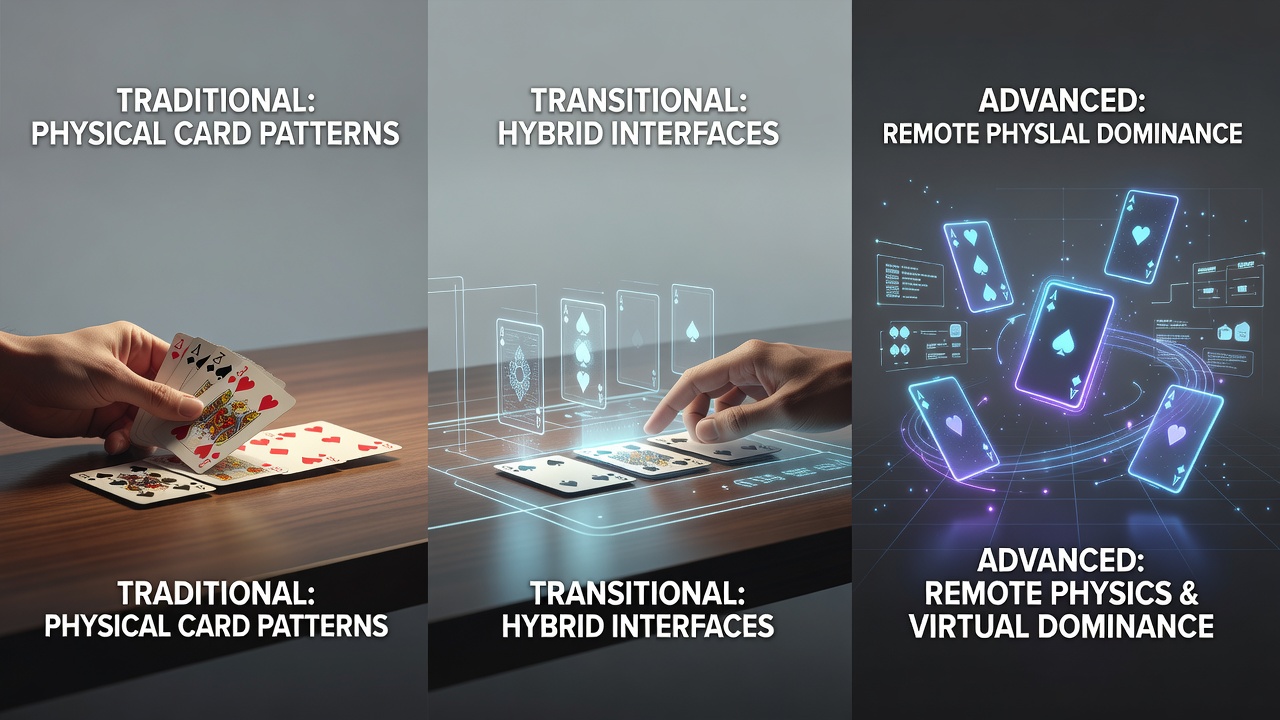
Remote participants often rely on aggregated statistics displayed on secondary monitors, whereas onsite players observe physical tells and table dynamics directly. The combination produces decision sequences where one group anticipates moves based on digital metrics while the other incorporates environmental cues unavailable through screens. Turnaround times between rounds have shortened by an average of 12 seconds in documented cases from 2023 onward.
Decision Pattern Shifts Observed in November 2026 Events
Events scheduled for November 2026 in locations such as the Swiss Engadin valley and French Alpine resorts continue this trajectory, with organizers reporting increased use of cross-platform synchronization software. Figures from the Australian Gambling Research Centre show that hybrid participants demonstrate greater variance in bet sizing when altitude exceeds 2,000 meters, possibly due to combined effects of reduced oxygen and digital distractions. Australian Gambling Research Centre data highlights similar patterns among international travelers who alternate between virtual and physical modes within single tournaments.
Those monitoring these gatherings note that bluff frequency rises among remote entrants during evening sessions, while onsite players adjust by extending physical observation periods before committing chips. Such adaptations emerge without formal rule changes, driven instead by repeated exposure to the dual environment.
Case Examples from Elevated Venues
One documented series in the Dolomites during 2025 involved 120 participants split evenly between remote and onsite roles, and post-event analysis found that collaborative strategy discussions via private virtual channels increased by 28 percent compared with fully onsite equivalents. Another gathering near Innsbruck incorporated weather-adaptive scheduling that paused play during high winds, forcing remote players to recalibrate expectations around delayed updates. These instances illustrate how external variables at elevation interact with interface capabilities to reshape sequential choices.
Conclusion
Hybrid card formats in elevated European settings have produced measurable changes in decision timing, information reliance, and risk calibration since their wider implementation after 2020. Data from multiple sources confirm that participants adapt through repeated exposure rather than through prescriptive training. Continued refinement of virtual interfaces alongside venue-specific logistics will likely sustain these evolving patterns through 2026 and beyond.